
Shark Wheel vs Traditional Skateboard Wheels: Why the Sine Wave Shape Matters

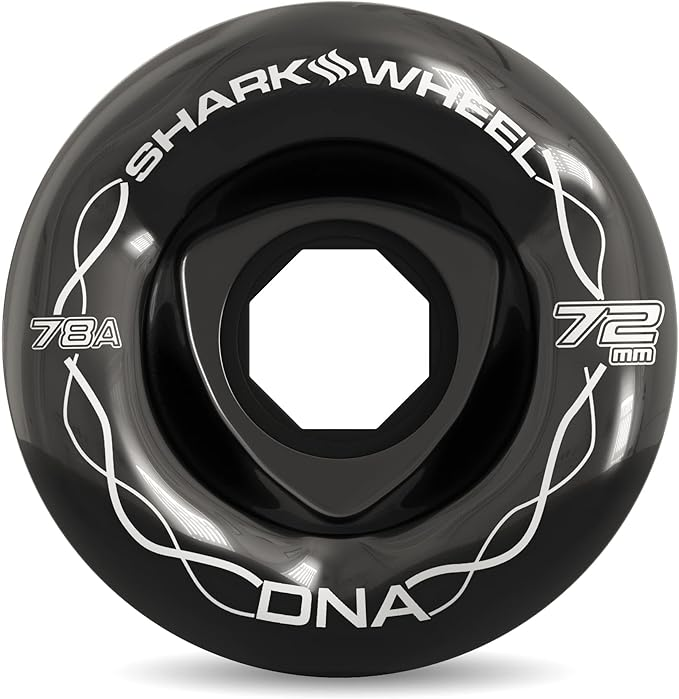
Quick answer: Shark Wheels grip more on rough surfaces and slide more predictably than traditional round wheels. They are built for real-world streets, not skatepark concrete.
The first thing you notice about Shark Wheels is the shape. Instead of a smooth cylindrical edge, the contact patch follows a sine wave pattern that wraps around the wheel.
What Makes Shark Wheels Different
A traditional wheel has one continuous contact line. Hit a rock — you stop. Shark Wheels create multiple smaller contact points around the wheel. When one section hits debris, the next section is already on the ground. Rocks roll past instead of stopping you.
Side-by-Side Comparison
| Factor | Shark | Traditional |
|---|---|---|
| Rough pavement | Rolls over cracks | Stops on debris |
| Smooth pavement | Slightly slower | Faster acceleration |
| Slide control | Predictable, longer | Sudden release |
| Wear | Even rotational | Coning |
Who Benefits Most
Commuters
If you skate to work or class, you are dealing with rough city streets. Shark Wheels were designed for exactly this.
Longboard Cruisers
Sine wave shape maintains contact through bumps. Our 72mm DNA Formula Longboard Wheels are tuned for this.
Slide and Freeride Skaters
More progressive breakaway. The 60mm 78a wheels are a popular freeride choice.
Which Shark Wheel to Choose
- 60mm 78a (skate/freeride): Available in clear, blue, and California Roll.
- 72mm DNA Formula (longboard): See the DNA 72mm set of 4.
Bottom Line
Shark Wheels solve a real problem most skaters live with: pavement is not actually smooth. If you ride outside a skatepark, the sine wave shape is a noticeable upgrade.

Shark Wheel 72mm DNA Longboard Wheels
Set of 4. Patented sine-wave contact patch for smoother rolling on rough pavement.
Be the first to know about new partner brands.
Monthly product picks, practical tips, and 10% off your first order.